When The Paycheck Changes: A Finance Guide For Self-Employed Families
A finance guide can make a big difference when your paycheck doesn’t arrive on the same schedule every month. Self-employment can give families greater control over how and when they work, but it also changes the way household finances operate.
Moreover, income may fluctuate from month to month, taxes are often less automatic, and benefits that once came through an employer may become personal expenses. A household financial plan should account for those differences.
Below, you’ll find some helpful tips on self-employed families and a finance guide that might help.

Build the Household Budget Around Reliable Income With A Finance Guide
A strong month can make a family’s finances look healthier than they actually are. Instead of building recurring expenses around peak earnings, look at income over a longer period. That’s why it’s a good idea to have a finance guide to help you during this period.
Furthermore, reviewing the previous 12 months can reveal how much income varies and whether certain seasons are consistently slower. Families can then base essential household expenses on a more conservative monthly figure.
For self-employed families, income can fluctuate from one month to the next. Of course, this can make it harder to plan for everyday expenses, save for the future, and prepare for unexpected costs.
Of course, with the right approach to budgeting, taxes, savings, and cash flow, you can take greater control of your money. Ideally, this can help you create a financial plan that works even when your income changes.

Keep Business and Household Money Separate
Mixing personal and business spending makes it difficult to determine how much the business truly earns. Separate accounts can create a clearer record of revenue, operating expenses, and the money transferred into the household.
Self-employed workers also need to prepare for taxes throughout the year. Setting aside a portion of income as payments arrive can prevent tax obligations from competing with mortgage payments, groceries, or other household expenses later.

Replace Benefits Deliberately
Traditional employment may include health insurance, disability coverage, life insurance, and retirement contributions. Self-employed families often need to arrange these independently. Insurance decisions should begin with the financial risk the family needs to cover.
Someone researching life insurance might compare term policies with permanent coverage or review whole life insurance quotes online as part of that process.
Prepare for More Than One Type of Emergency
Self-employed households can face personal and business emergencies at the same time. A broken furnace affects the home, while failed equipment or a late-paying client can affect income.
Keeping an emergency reserve can reduce the need to use credit when either happens. Some families may benefit from maintaining separate household and business reserves, so a company expense does not consume money intended for personal emergencies.
Retirement savings should also remain part of the plan. Self-employed workers have access to retirement account options that can allow them to save even without an employer-sponsored plan.
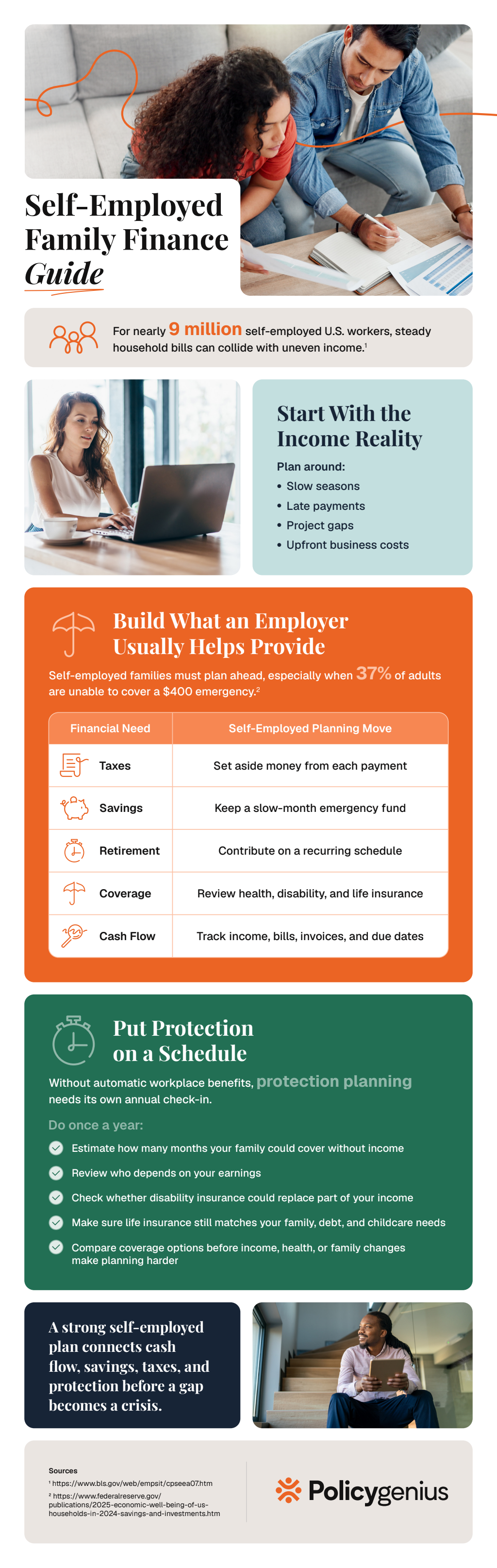
Financial stability for a self-employed family depends less on receiving the same income every month and more on preparing for variation. Conservative budgeting, separate accounts, tax planning, appropriate insurance, emergency reserves, and consistent retirement contributions can create structure around an unpredictable income stream. Look over the infographic below for more information.