Tracking A Roof Leak: A Practical Source Map For Homeowners
A roof leak can be frustrating to track down and finding the origin of the problem even more challenging. More so, especially when water stains on your ceiling or walls appear far from the actual source of the problem. Understanding how to follow the signs of moisture and identify potential trouble spots can help homeowners narrow down the source.
Moreover, this helps prevent further damage and to know when it’s time to call a professional roofer. Furthermore, a water stain on the ceiling rarely tells you exactly where a roof is leaking. Water can enter through one location, travel along rafters or roof decking, and appear several feet away.
Finding the source requires working backward from the interior damage while checking the roof features most likely to allow water inside.
Below, you’ll discover how to track a roof leak and prevent a series of home maintenance problems and resolve them.

Start With the Interior Evidence
Begin by marking where water appears inside the house. Look for ceiling stains, peeling paint, damp drywall, musty odors, or discolored insulation.
If the attic is safely accessible, inspect the area above the damage during daylight. Look for wet insulation, darkened wood, water trails, or daylight passing through the roof. Follow moisture marks upward toward the highest visible point, since gravity often carries water downward from its actual entry point.
Finding the origin of a leak requires more than simply looking for missing shingles or obvious damage, as water can travel along roof decking, rafters, and other structural materials before making its way indoors. With a practical source map, you’ll have a better idea of where to look and what steps to take to protect your home.

Map the Location to the Roof
Once you identify the approximate interior location, compare it with the roof directly above it. Certain features deserve particular attention.
Roof penetrations are common trouble spots. Plumbing vents, skylights, chimneys, and exhaust vents depend on flashing and seals to direct water away from openings. Cracked flashing, deteriorated sealant, or damaged materials around these areas can create an entry path.
Roof valleys should also be checked because they carry large amounts of runoff. Debris, damaged shingles, or deteriorated valley materials can interfere with drainage.
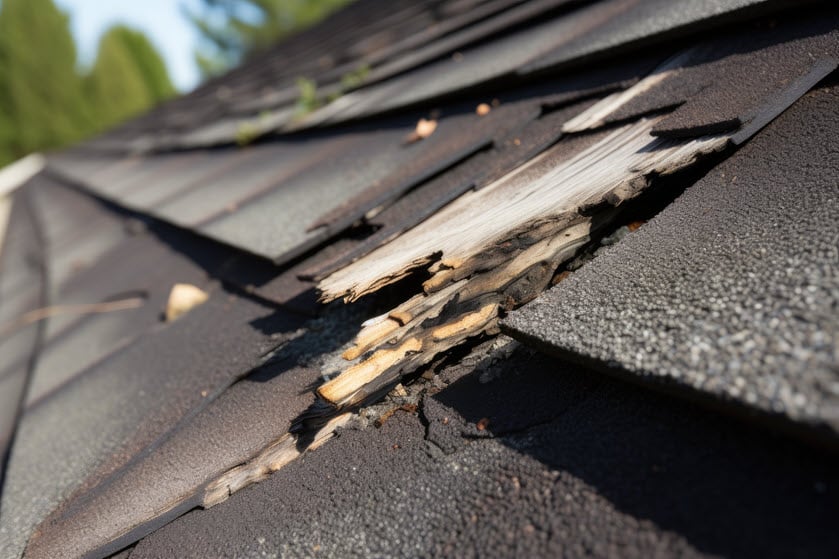
Look Beyond Missing Shingles For A Roof Leak
A missing shingle is an obvious clue, but many leaks are less visible. Lifted or cracked shingles, exposed fasteners, deteriorated flashing, and damaged roof edges can all allow moisture into the roofing system.
Pay attention to when the leak occurs. Water appearing only during wind-driven rain may suggest a different entry point than a leak that develops after snow or ice accumulation.
After a major storm, active water intrusion or extensive roof damage may require emergency roof repair rather than waiting for the next dry weekend to investigate.

Avoid Creating Another Problem
Walking on a roof can be dangerous, especially when surfaces are steep, wet, icy, or damaged. Many useful observations can be made from the ground, attic, or a securely positioned ladder without stepping onto the roof itself.
Finding a roof leak is often a process of connecting clues rather than locating a hole directly above a stain. Start with the interior damage, trace moisture upward, and map that position against roof penetrations, valleys, flashing, and shingles. Identifying the likely entry point early can help limit water damage. Look over the infographic below to learn more.